If you have a modern electric range in your kitchen, you already know the appeal. Glass-top electric stoves are sleek, modern, and incredibly easy to wipe down after a messy meal. They heat up quickly and provide a seamless look that elevates the design of any kitchen. However, that beautiful aesthetic comes with one distinct vulnerability: the glass itself.
Whether it was a heavy cast-iron skillet slipping from your grip, a spice jar tumbling out of an overhead cabinet, or a sudden, unexplained fracture caused by thermal shock, a cracked glass stove top is a sinking feeling.
We get emergency calls about this specific issue all the time here at All About Repair. Without fail, the very first question panicked homeowners ask us over the phone is: “Is it still safe to cook on if the crack is just on the edge?” or “Can I just use the burners that aren’t cracked?”
The short, uncompromising answer is: No. It is a major safety hazard, and you should stop using the appliance immediately.
In this article, we are going to pull back the curtain and show you exactly why a cracked cooktop is so dangerous, why you should never try to fix it yourself with store-bought epoxy, and take you behind the scenes of a recent repair in the Portland area to show you exactly how our expert technicians solve the problem.
The Hidden Dangers of a Cracked Glass Cooktop
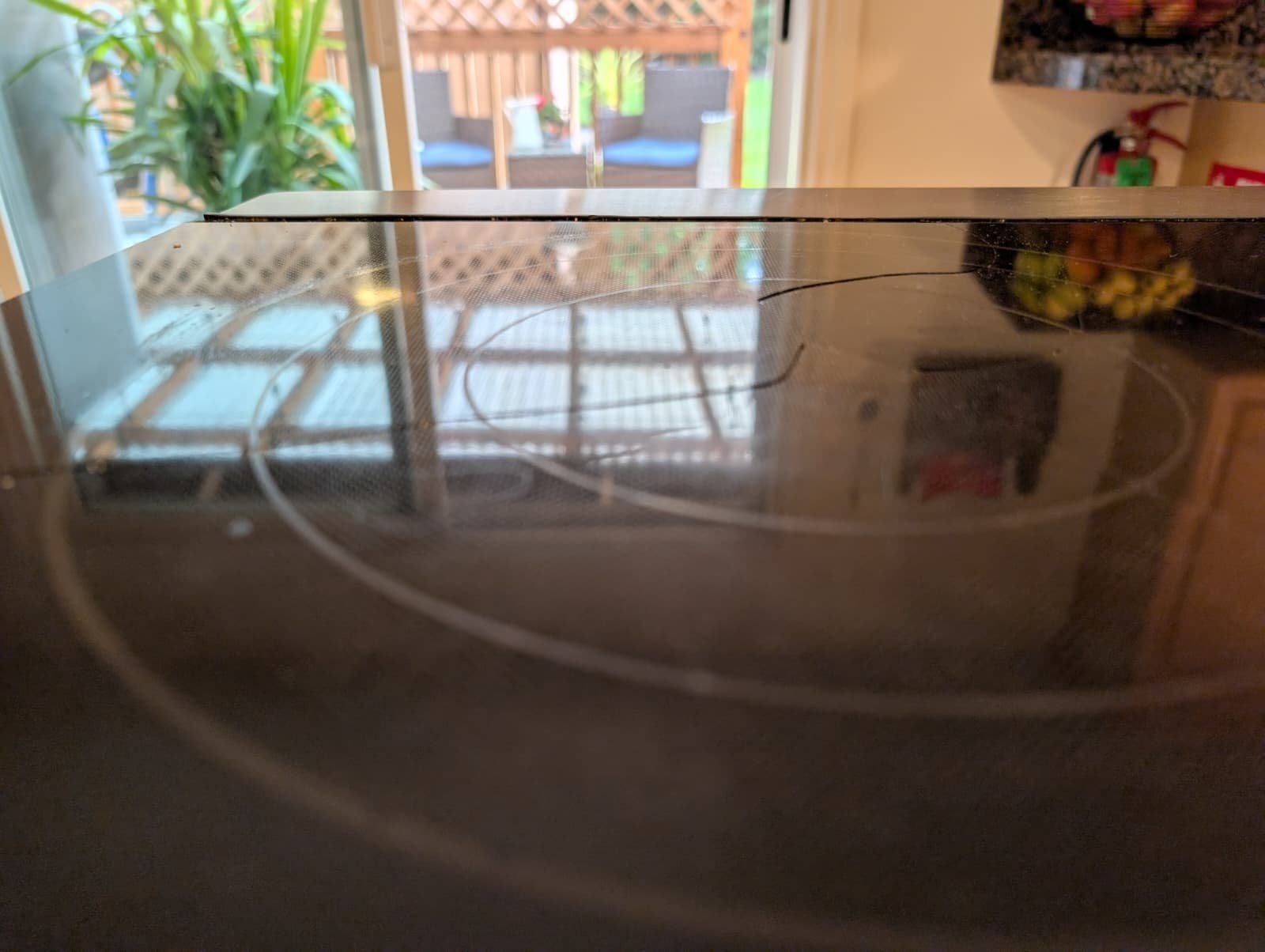
At first glance, a hairline fracture might seem like a purely cosmetic issue. It’s just glass, right? Unfortunately, the smooth black surface of your stove is hiding a high-voltage electrical system directly underneath. Here is why cooking on a compromised surface is a recipe for disaster:
1. Severe Electrocution Risks
The glass top is the only barrier between your metal pots, your hands, and the high-voltage heating elements beneath. If a pot boils over—which happens to the best cooks—water, soup, or oil can instantly seep down through the crack. When liquid makes contact with live electrical wiring, it can cause a severe short circuit, spark, or deliver a dangerous electrical shock to anyone touching the stove or a metal pot resting on it.
2. Catastrophic Fire Hazards
Even if you manage to avoid spilling liquids, the crack fundamentally compromises the structural integrity of the glass. The intense heat from the burners causes the glass to expand and contract. A small crack will inevitably spread under this thermal stress. If the glass shatters completely while you are cooking with hot oil, you are looking at an immediate and highly dangerous grease fire.
3. Fried Control Boards
Modern stoves are essentially large computers. They rely on sensitive digital control boards and thermal sensors to regulate temperature. If moisture or steam penetrates a crack in the glass, it will inevitably reach these electronic components. A bit of steam is all it takes to corrode a motherboard, turning a straightforward glass replacement into a total appliance failure that costs hundreds of dollars more to fix.
Why Do Glass Stove Tops Crack in the First Place?
Glass cooktops are made from a specialized ceramic-glass blend designed to withstand extreme temperatures, but they are not invincible. The most common culprits behind a shattered top include:
- Blunt Force Impact: Dropping heavy cookware, coffee mugs, or cans directly onto the surface.
- Thermal Shock: Placing a freezing cold pot directly onto a blazing hot burner, or taking a red-hot pan and setting it on a cold, unused section of the glass. The rapid temperature change causes the glass to expand or contract too quickly, resulting in a loud pop and a sprawling crack.
- Micro-Scratches: Dragging heavy cast-iron skillets or rough-bottomed pots across the surface creates microscopic scratches. Over time, these scratches weaken the tension of the glass, making it highly susceptible to cracking under normal heat.
Can You Just Replace the Glass, or Do You Need a New Stove?
The good news is that a cracked top does not mean your entire stove is headed for the landfill. In almost all cases, the internal components—the heating elements, the wiring, and the control boards—are perfectly fine.
At All About Repair, we specialize in ordering the exact factory-OEM replacement glass assembly for your specific make and model. By swapping out just the top assembly, we can make your stove look and function like it is brand new, saving you a massive amount of money compared to buying a totally new appliance.
Behind the Scenes: How We Replace a Glass Cooktop
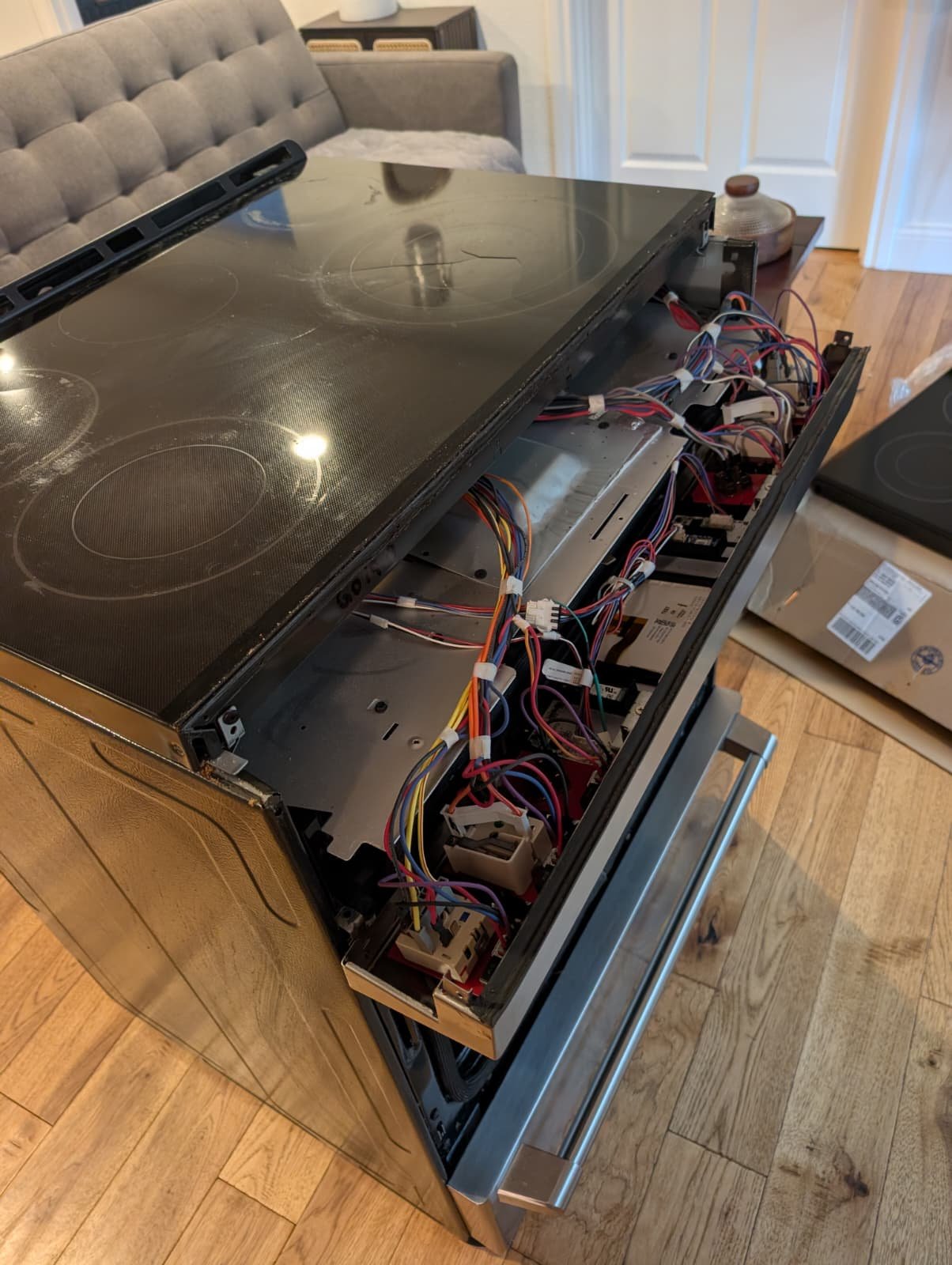
To show you why this is a job for seasoned professionals, let’s look at a recent repair our team completed for a local customer.
Step 1: Safe Disassembly and Electrical Isolation
Before we even touch a screwdriver, the unit must be completely disconnected from the 240-volt power source. Once the power is isolated, we carefully pull the heavy unit away from the wall and begin disassembling the front and rear brackets that lock the glass frame into the chassis.
As you can see in the photo above, lifting that sleek glass lid reveals a chaotic web of high-voltage wiring, thermal limiters, and sensitive switches.
Step 2: Navigating the Main Control Boards
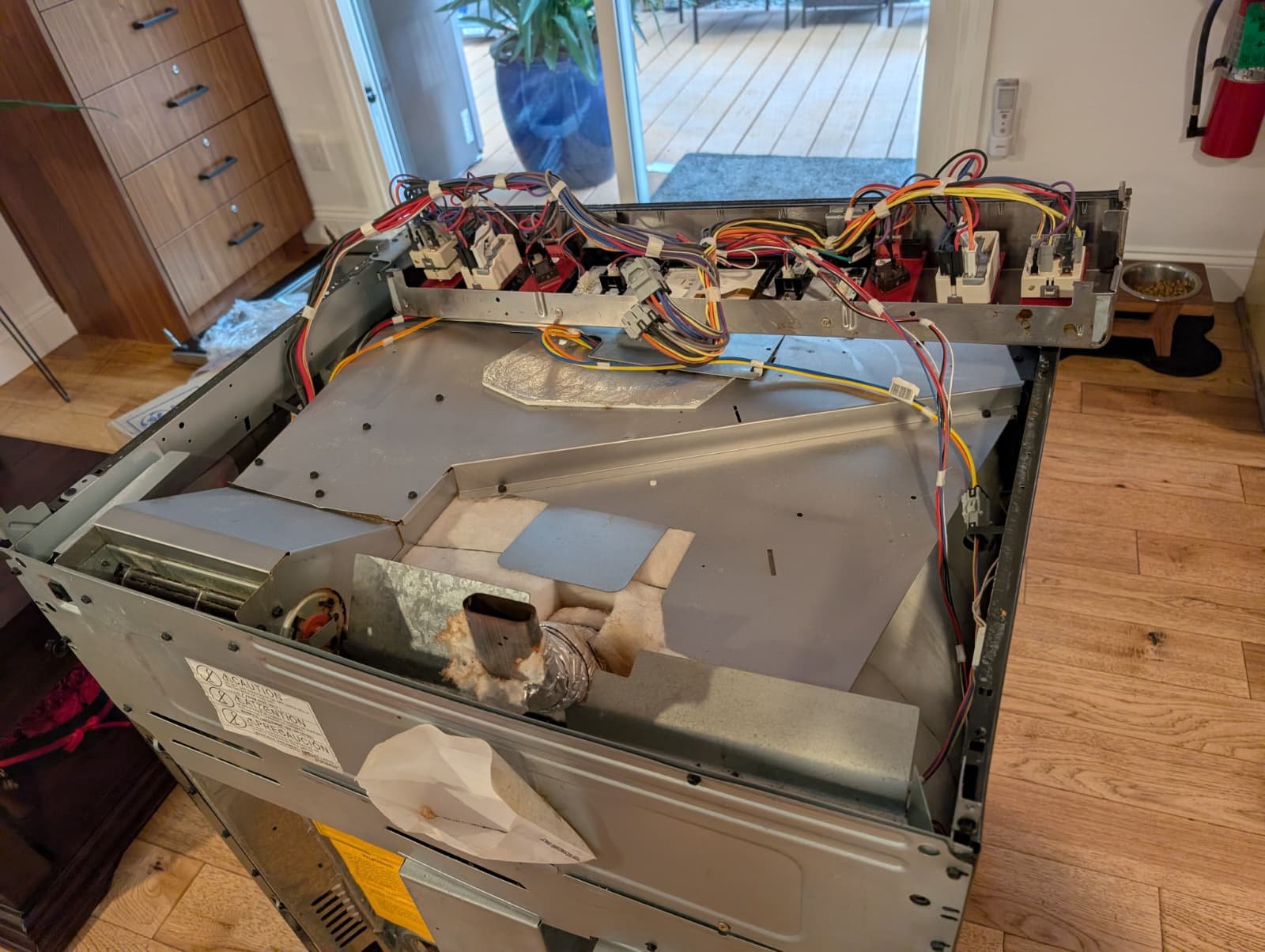
The back panel of the stove must be removed to access the main nervous system of the appliance. Every single wire connected to the surface burners must be meticulously mapped out, labeled, and carefully disconnected. A single crossed wire during the reassembly phase can short out the control board or cause a burner to run at maximum heat indefinitely, creating a massive fire risk. Our technicians ensure every connection is documented before it is detached.
Step 3: Transferring the Heating Elements
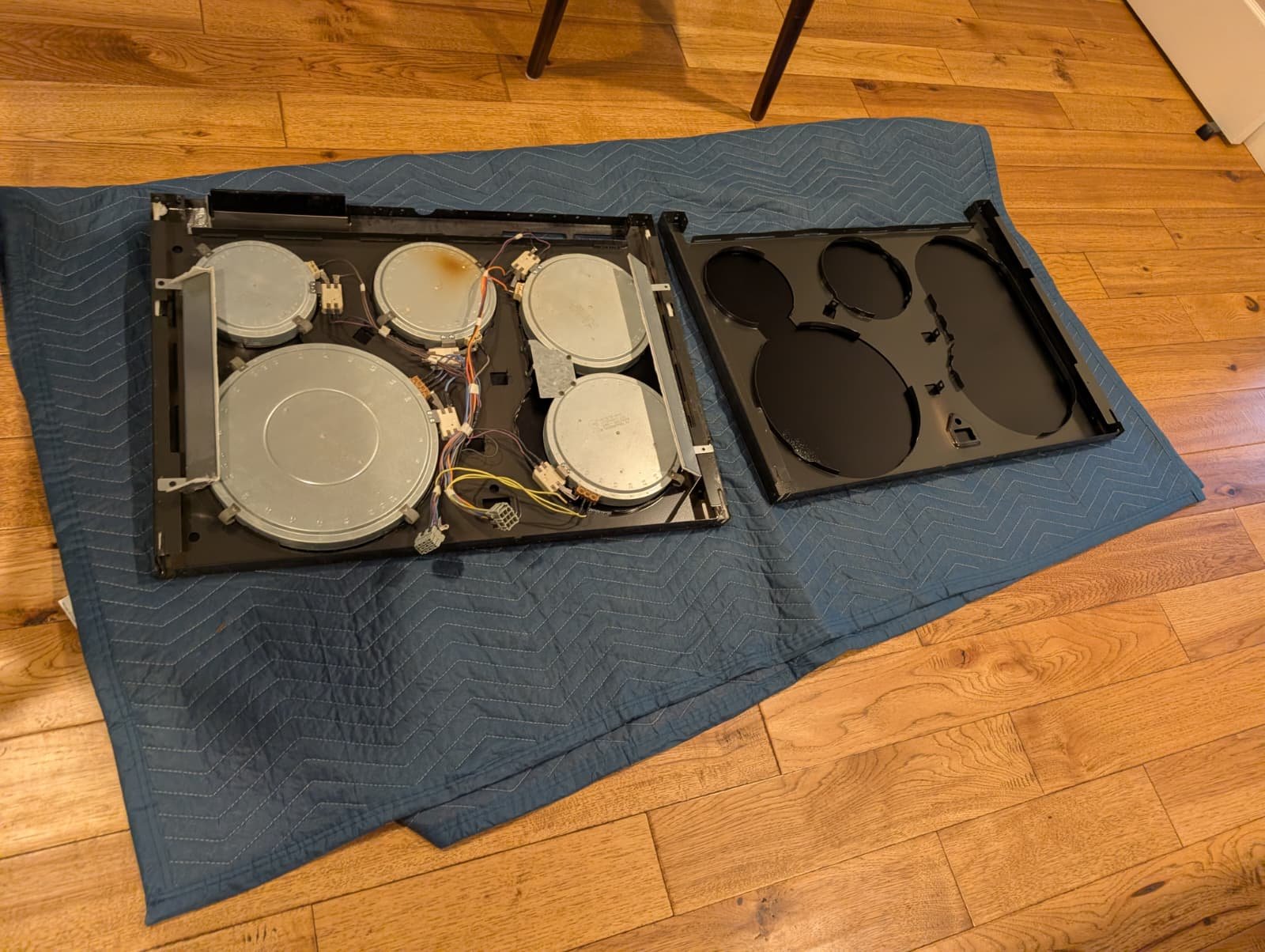
The replacement part from the manufacturer is usually just the glass and the outer metal frame. It does not come with the actual burners.
We carefully extract the fragile radiant heating elements (the round silver discs) from the old, broken glass top. These elements are highly sensitive and can be easily damaged if mishandled. We transfer them over to the brand-new glass assembly, ensuring they are perfectly centered. If a burner is mounted even a fraction of an inch off-center, the heat will not distribute evenly to your pots and pans.
Once the elements are secured, the wiring harnesses are reconnected, the thermal insulation is checked, and the entire assembly is mounted back onto the stove chassis. After a rigorous diagnostic test to ensure every burner cycles on and off correctly, the stove is ready for dinner!
Why This is Absolutely NOT a DIY Project
In the age of internet tutorials, it is tempting to try and fix household problems yourself. However, replacing a glass cooktop is not the time to test your DIY skills.
- Lethal Voltage: Electric stoves run on 240 volts of electricity—double the power of a standard wall outlet. Mishandling the internal wiring can result in fatal shocks.
- Fiberglass Insulation: The interior of the stove is packed with specialized thermal insulation. Disturbing this without proper protective gear can cause severe respiratory and skin irritation.
- Voided Warranties: Opening the chassis of your stove and tampering with the wiring will immediately void any remaining manufacturer warranty or home warranty you might have.
Need Your Appliance Fixed Fast? Call the Local Experts
A cracked stove doesn’t mean you have to rely on microwave dinners for the next month, and it certainly doesn’t mean you need to spend thousands of dollars at a big-box appliance store. You just need the right local experts to handle the heavy lifting.
If you are dealing with a broken glass cooktop, a refrigerator that refuses to cool, or a washing machine that sounds like a jet engine, All About Repair has you covered. We pride ourselves on transparent pricing, rapid response times, and getting the job done right the very first time.
Proudly serving the greater Portland and Clackamas areas, we are your neighborhood appliance experts. Don’t risk your safety by cooking on broken glass. Reach out to our team today to get your kitchen back in perfect working order!
Need Appliance Repair in Clackamas?
Don't let a broken appliance disrupt your routine. All About Repair serves Clackamas, Happy Valley, Oregon City & surrounding areas — most appointments within 1–2 business days.